Hazardous chemical and flammable-liquid storage is not a shelving decision. It is a combined process-safety, fire-and-life-safety, occupational-health, environmental and operational problem. In Abu Dhabi, a credible design starts with the exact materials, quantities and activities—not with a generic warehouse layout.
Owners, industrial tenants and logistics operators should establish the regulatory path before leasing, converting or expanding a storage area. A paint store, laboratory chemical room, fuel-transfer area and bulk-liquid warehouse may all contain hazardous materials, but their risk controls and approval interfaces can be very different.
Start with a verified hazardous-material inventory
The design team needs a controlled inventory that identifies each substance, its physical form, maximum quantity, container type, storage temperature, hazard classification and current safety data sheet (SDS). The inventory should also explain how material arrives, moves, is opened or dispensed, and leaves the facility.
This matters because storage risk is driven by more than volume. Flash point, vapour behaviour, chemical incompatibility, toxicity, oxidising properties, water reactivity, container failure and the intended operations can all change the required controls.
The Abu Dhabi Public Health Centre’s ADOSH codes of practice identify the Hazardous Materials Code of Practice as a mandatory technical requirement for entities within its scope. That code requires employers to assess hazardous materials present, stored or handled at the workplace and to consider applicable laws, authority guidance, permit conditions and manufacturer safety data.
Core FLS design questions for chemical and flammable-liquid stores
1. Are incompatible materials separated?
Materials that can react dangerously should not share containment or storage simply because they fit in the same room. The compatibility review should inform zoning, cabinet or bay selection, separation distances, spill control and emergency response.
2. Can a leak or spill be contained?
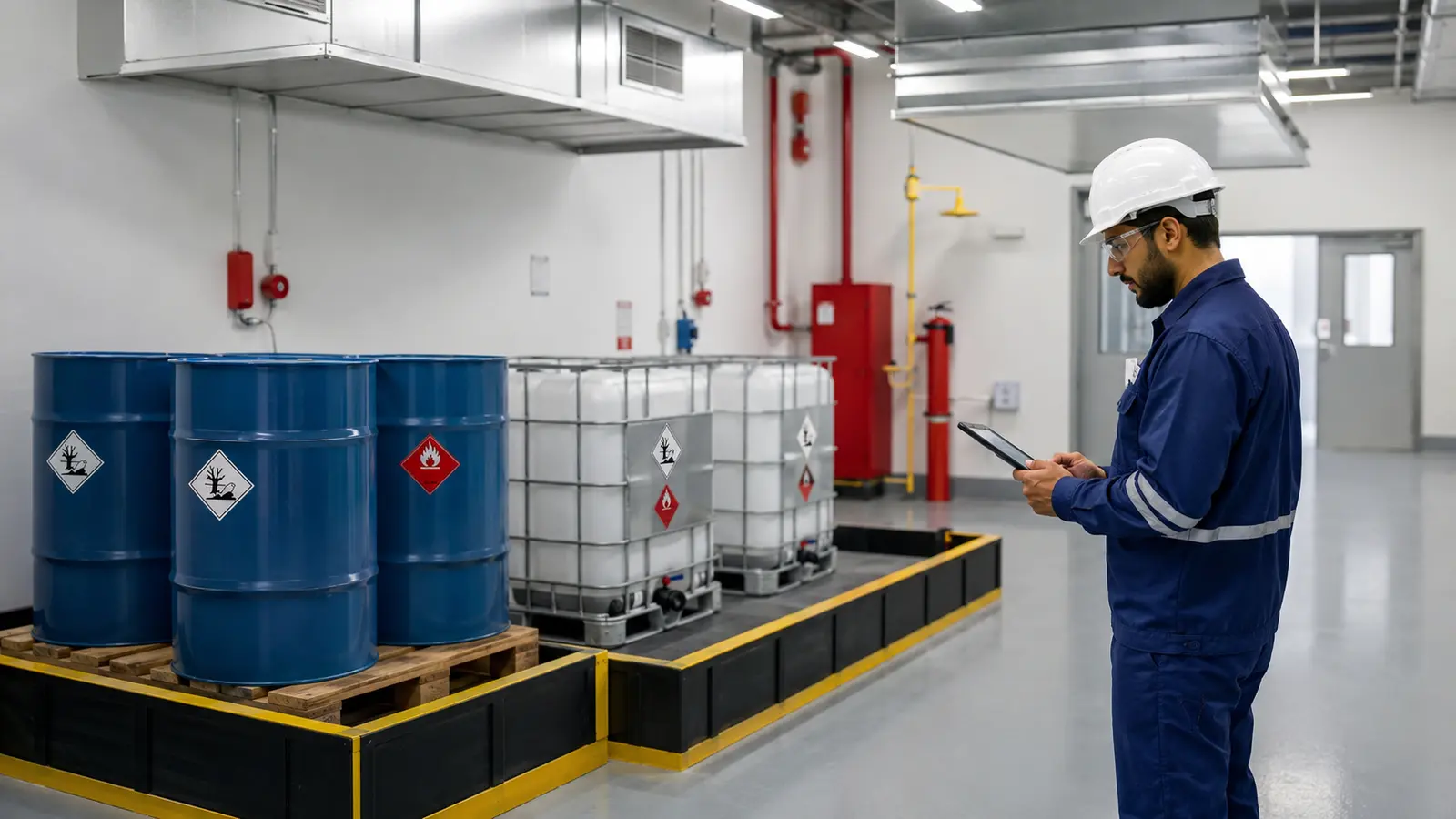
Secondary containment should be sized and arranged for the credible release scenario and should not create a path to drains, public areas, escape routes or incompatible stock. Floors, kerbs, sumps and drainage isolation must be coordinated with fire-fighting water management and the facility’s environmental controls.
3. How are vapours controlled?
Ventilation should be based on the material hazard and operating scenario. The team must consider extraction location, make-up air, discharge point, equipment suitability, monitoring, normal operation, failure modes and emergency shutdown. A fan alone is not a complete smoke or vapour-control strategy.
4. What could ignite the atmosphere?
Potential ignition sources include electrical equipment, hot surfaces, static discharge, vehicles, charging stations, maintenance tools and hot work. Hazardous-area classification may be required for specific scenarios, followed by coordinated electrical and earthing design.
5. Is the fire-protection strategy suitable for the stored commodity?
Detection, alarm, suppression, water supply, foam or other extinguishing media, fire-resistance, access and emergency response must be selected for the actual hazard. Commodity, packaging, rack arrangement and storage height can be as important as floor area. The strategy should be developed with appropriately qualified specialists and checked against current authority and insurer requirements.
Abu Dhabi’s hazardous-materials framework
The Abu Dhabi Hazardous Materials Management Centre (HMMC) coordinates policy, regulation and standards related to hazardous materials across the emirate. The law establishing the Centre applies to hazardous substances handled in Abu Dhabi, including free zones, subject to stated exclusions. HMMC has also issued Abu Dhabi guidance covering areas such as the marking of hazardous materials.
Fire and preventive-safety requirements interface with the Abu Dhabi Civil Defence Authority’s fire-safety guidance. Occupational controls interface with ADOSH requirements. Depending on the material and facility, further competent entities may be involved for environment, transport, customs, ports, energy, waste, industrial licensing or emergency planning.
This is why the phrase “HAZMAT permit” should not be treated as one universal document. The required approvals depend on the material lifecycle and jurisdiction: import, transport, storage, use, processing, waste or disposal may involve different applications and evidence.
Documents that make a submission stronger
- controlled hazardous-material inventory and current SDS register;
- site plan, floor plan, sections and storage elevations;
- maximum quantities by room, bay, cabinet or tank;
- chemical compatibility and segregation assessment;
- spill-containment, drainage and isolation details;
- ventilation calculations and equipment schedules;
- hazardous-area classification where applicable;
- fire detection, suppression, alarm and water-supply information;
- risk assessment, emergency response and credible release scenarios;
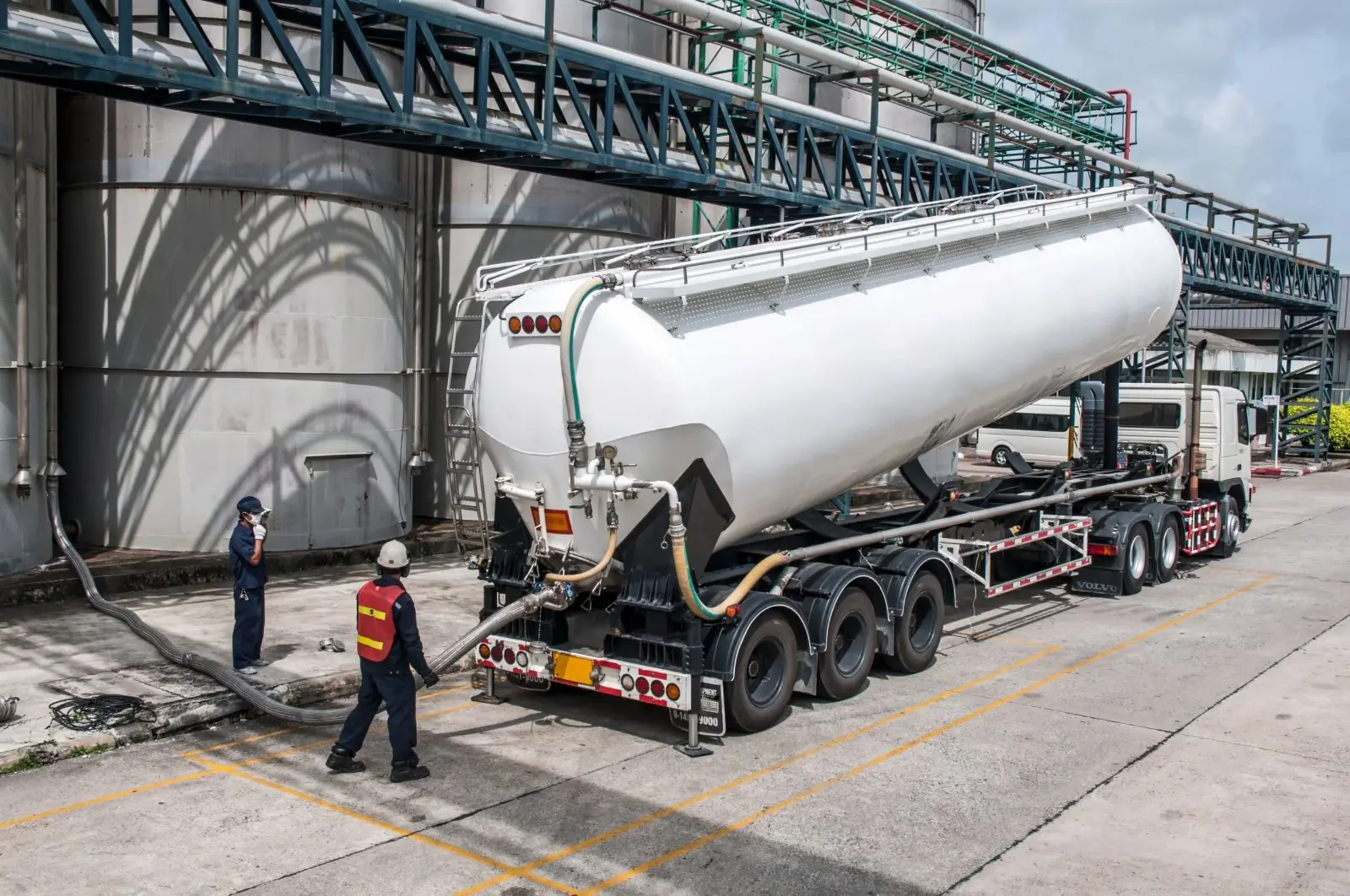
- material movement, loading, unloading and waste-handling procedures; and
- inspection, maintenance and staff-competency arrangements.
Frequent design and approval failures
Common failures include using an outdated SDS, designing for average rather than maximum stock, grouping chemicals by supplier instead of compatibility, placing spill containment in conflict with escape routes, overlooking charging or hot-work ignition sources, and selecting fire protection before confirming the commodity and storage arrangement.
Another frequent problem is change after approval. A facility may add a new chemical, larger container, higher rack or repacking activity without reassessing the original design basis. A controlled management-of-change process should trigger technical review before the new condition is introduced.
How Infinity MEA can support the project team
Infinity MEA can coordinate the facility layout, fire-protection design, ventilation, electrical interfaces, risk documentation and authority-submission information around a defined hazardous-material inventory. For complex process hazards, the work can connect with a structured HAZOP or HAZID study.
The final design and submission route must be confirmed against current requirements and the company’s authorised scope. Speak with Infinity MEA before committing to a lease or construction package for hazardous-material storage in Abu Dhabi.
Frequently asked questions
What information is needed before designing a chemical store?
At minimum, provide the current SDS for every material, maximum quantities, container sizes, storage conditions, intended handling activities, delivery method, waste route, site location and available building records.
Is a fire-rated room enough for flammable-liquid storage?
Not by itself. The design may also need compatibility controls, containment, ventilation, ignition-source control, suitable electrical equipment, detection, suppression, access and operating procedures.
Who issues a HAZMAT permit in Abu Dhabi?
There is no single answer for every activity. The competent entity depends on the material, jurisdiction and whether the activity involves import, transport, storage, use, processing or waste. A permit matrix should be prepared for the specific facility.
When should the storage risk assessment be updated?
Update it when materials, quantities, packaging, layout, process, ventilation, fire protection, staffing or emergency arrangements change—and at the review interval required by the applicable management system or authority.
Speak with Infinity MEA about the fire, safety, risk and approval priorities affecting your Abu Dhabi project.
Contact our team Abu Dhabi Fire & Safety Engineering
 Abu Dhabi Fire & Safety Engineering