A third-party House of Expertise (HoE) inspection should give an owner independent evidence—not another informal site walk. The value comes from a defined scope, qualified reviewers, traceable observations and disciplined close-out against the approved design and applicable fire-and-life-safety requirements.
In Abu Dhabi, owners may encounter HoE involvement for specialist fire-safety reviews, building inspections, hazardous-material or gas-related interfaces, façade matters, emergency planning or other project-specific requirements. The exact role, required licence and authority interaction should be confirmed for the building and transaction rather than assumed from another project.
What does “House of Expertise” mean in practice?
In the UAE fire-safety market, House of Expertise is commonly used for a Civil Defence-recognised specialist consultancy carrying out defined independent fire-and-life-safety services. Those services may include design review, inspection, testing oversight, fire-risk assessment and compliance reporting, subject to the consultancy’s actual approvals and scope.
Owners should verify the firm and individual engineers against the current authority and classification requirements for the intended service. The DMT classification portal shows that the ability to apply for building-permit services can depend on firm type, registration, classification, commercial licence and activity. Do not rely only on a proposal heading or marketing description.
When can an independent FLS inspection help?
- before an authority inspection or occupancy-related submission;
- during due diligence for acquisition, leasing or change of use;
- after a major fit-out, refurbishment or fire-system modification;
- when approved drawings do not match visible site conditions;
- when repeated defects or false alarms indicate a wider system problem;
- after long periods of incomplete maintenance or record gaps;
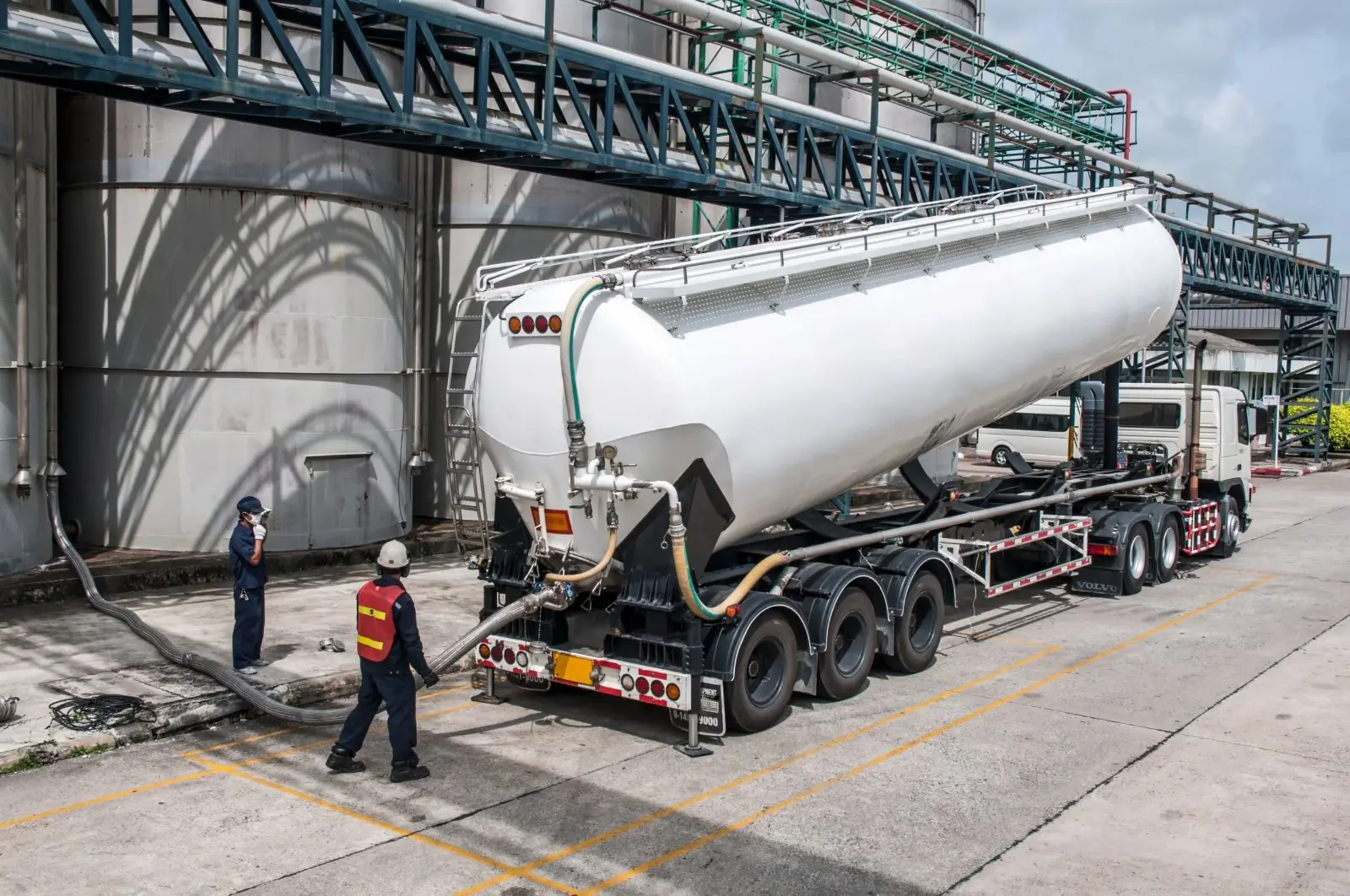
- for hazardous-material, gas, industrial or high-risk occupancies; and
- when the owner needs independent verification of contractor close-out.
Independent inspection is not a substitute for the contractor’s quality control, the supervising consultant’s duties, statutory inspection, maintenance or testing and commissioning. It is an additional assurance layer with a clearly defined purpose.
What should be reviewed before the site visit?
The inspection team should not arrive blind. A document review establishes what the building was intended and approved to do. Useful inputs include:
- latest approved architectural, FLS and MEP drawings;
- fire strategy, code analysis and relevant calculations;
- approved material and equipment submissions;
- cause-and-effect matrix, control narratives and interfaces;
- testing, commissioning and integrated-system test records;
- door, damper, alarm, suppression and emergency-lighting certificates;
- previous authority observations and closure evidence;
- maintenance records, impairment logs and incident history; and
- current room use, occupancy and hazardous-material information.
Where records are missing, that absence should be reported as a limitation and risk. It should not be hidden by treating the visible installation as automatically approved.
What happens during a good HoE inspection?
Life-safety route review
The team checks exit access, travel paths, doors, stairs, final exits, signage, emergency lighting, changes of level and obstructions. The inspection also considers whether room use or occupancy has changed from the approved basis.
Compartmentation and passive protection
Rated walls, floors, shafts, doors, penetrations, fire-stopping and dampers are sampled against the approved design and available certification. Above-ceiling and service-riser access is often essential.
Active fire systems
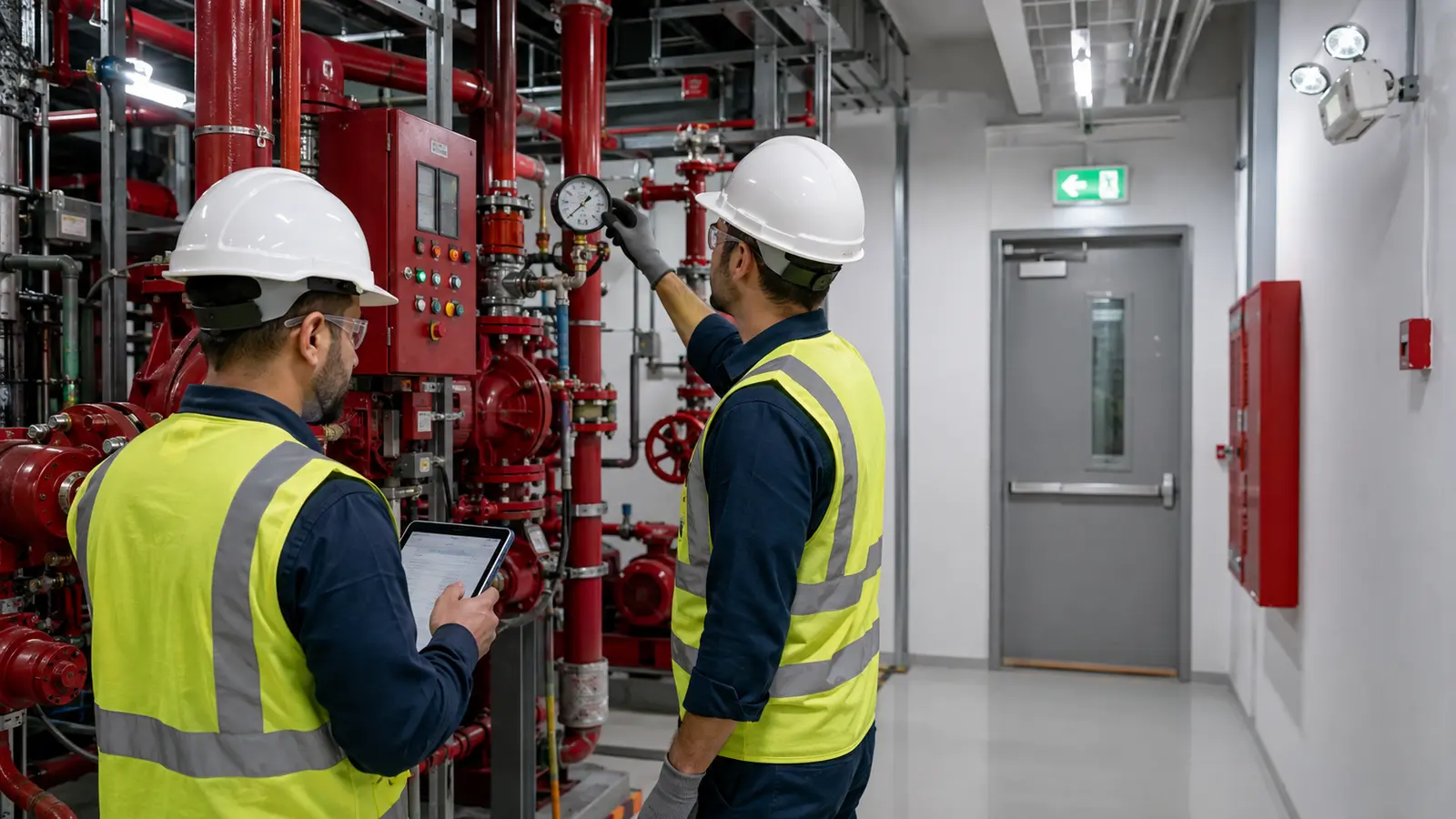
Alarm and detection, sprinklers, hose reels, hydrants, pumps, water storage, special suppression and interfaces are reviewed within the agreed scope. Functional witnessing should follow an approved method and should not create an unsafe impairment.
Smoke-control and emergency interfaces
The review may include smoke extract, make-up air, stair or lobby pressurisation, fireman’s controls, lifts, access control, HVAC shutdown and emergency power. These systems should be checked as an integrated sequence, not only as individual equipment.
Operations and readiness
Inspection also looks at records, staff roles, impairment control, housekeeping, storage, access for emergency response and the ability to maintain systems after handover.
How findings should be reported
A useful report separates life-safety risk from ordinary snagging. Each finding should identify the location, observed condition, reference basis, risk or consequence, required action, responsible party and close-out evidence. Photographs should be dated and traceable to plans.
Priority categories must be defined. “Critical,” “major” and “minor” have little value unless the report explains what response and timeframe each category requires. Where an immediate unsafe condition is observed, the escalation route should already be agreed with the owner.
Abu Dhabi’s evolving competency requirements
The Abu Dhabi Civil Defence Authority announced a new accreditation initiative in April 2026 for engineering consultancies involved in fire-protection and life-safety design submissions. It states that the relevant certification and DMT classification requirement becomes mandatory for fire-protection design submissions from 1 September 2026.
That announcement concerns design-submission competency and should not be stretched into a blanket statement about every inspection service. It does, however, reinforce an important owner responsibility: verify that both the company and assigned professionals hold the current credentials required for the exact work.
Questions to ask before appointing an inspector
- What exact authority recognition, licence and classification apply to this scope?
- Who will sign the report, and what is that person’s discipline and experience?
- What approved documents and code edition form the review basis?
- What areas, systems and functional tests are included or excluded?
- How will urgent findings be escalated?
- What evidence is required to close each finding?
- Will the consultant revisit the site and issue a final close-out record?
Infinity MEA can support owners with pre-inspection document audits, as-built architectural and FLS records, design coordination, testing documentation and technical close-out. Where a statutory or HoE role requires a specific approval, the appointment and deliverables should be structured around the appropriately authorised party. Contact Infinity MEA to review the inspection scope for your Abu Dhabi asset.
Frequently asked questions
Is a third-party HoE inspection the same as an ADCDA inspection?
No. An independent consultant review does not replace inspection or approval by Abu Dhabi Civil Defence Authority. The project team should confirm how the third-party report fits the applicable authority process.
Can the inspector approve contractor work?
The inspector can verify and report within the appointed scope. Contractual acceptance, consultant approval and statutory acceptance remain with the parties and authorities assigned those responsibilities.
Should every defect be treated as a critical life-safety issue?
No. Findings should be risk-based and clearly prioritised. However, an issue that compromises escape, compartmentation, suppression, alarm or emergency response may require immediate escalation.
What is needed for inspection close-out?
Typically, revised drawings, photographs, certificates, test results, approved material evidence and a reinspection record are used. The exact evidence should be stated against each finding.
Speak with Infinity MEA about the fire, safety, risk and approval priorities affecting your Abu Dhabi project.
Contact our team Abu Dhabi Fire & Safety Engineering
 Abu Dhabi Fire & Safety Engineering